

Perforated Ear Drum
A perforated ear drum is a hole in the ear drum.
Treatment for Perforated Ear Drum
Treatment of a perforated ear drum depends on several factors. In some non-symptomatic patients, a very small perforation can sometimes be left alone to heal on its own. In fact, sometimes even if a very small perforation does not heal on its own, it can still be left alone if the patient is asymptomatic. Additionally, some patients are able to have a 'paper patch' placed over the perforation in the office; the patch allows an avenue through which skin can grow to reach the other side of the perforation, thus closing the hole. However, a large majority of patients need surgical repair of an ear drum perforation. This procedure is called a tympanoplasty and involves general anesthesia. In this procedure, fascia (fibrous tissue) is taken from the patient’s own ear and placed as a graft over the perforation.
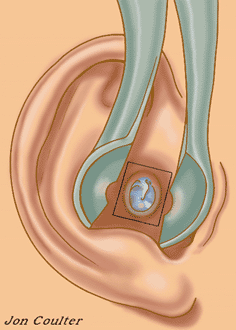
Step 1: The underlay technique is illustrated. The eardrum and ear canal are magnified.
Step 1: The underlay technique is illustrated. The eardrum and ear canal are magnified.
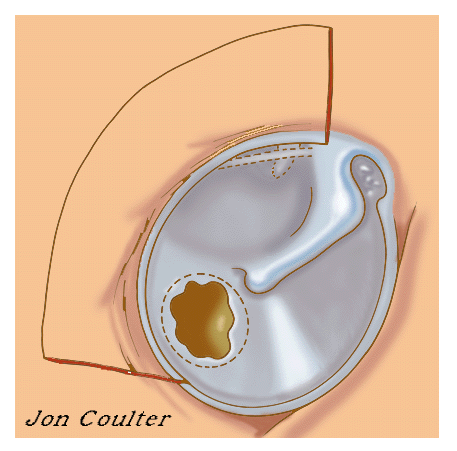
Step 2: An incision is made in the ear canal. The edges of the hole in the eardrum are removed.
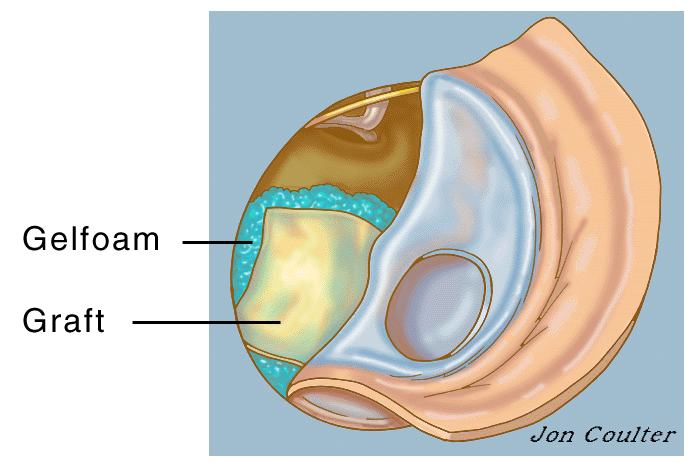
Step 3: The ear canal skin and portion of the eardrum are lifted. A temporalis fascia graft is placed under the hole in the eardrum. The graft is supported by absorbable gelfoam packing.
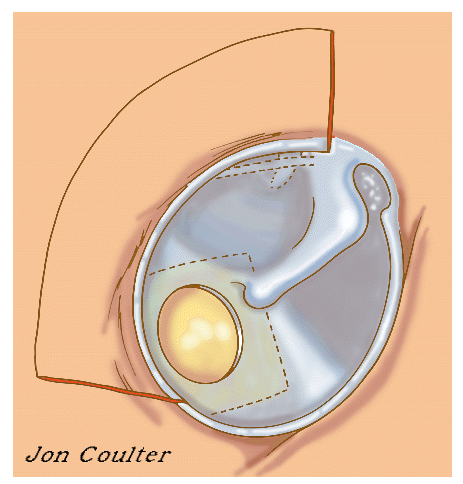
Step 4: The eardrum and ear canal skin is laid back.
An alternative is to place the graft over the perforation, a technique called a lateral graft technique.

Step 1: The lateral graft technique is illustrated. The eardrum and ear canal are magnified.
Step 1: The lateral graft technique is illustrated. The eardrum and ear canal are magnified.
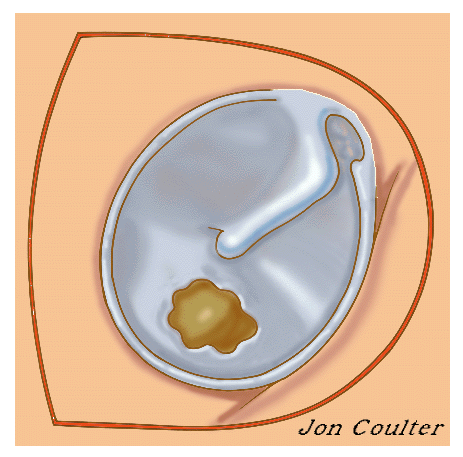
Step 2: A circumferential incision is made in the ear canal.
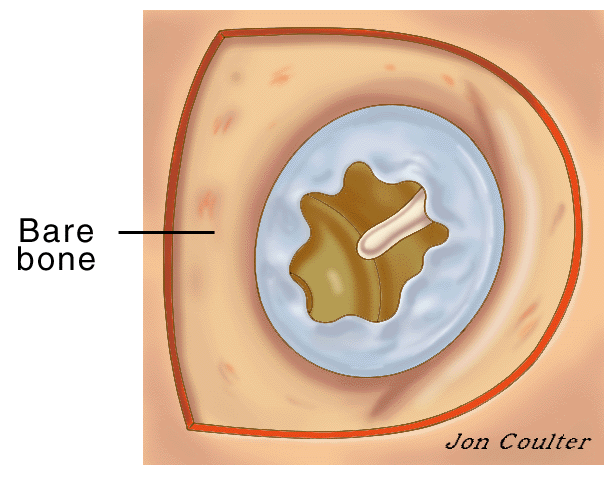
Step 3: The skin of the ear canal is elevated down to the eardrum and is removed along with the skin layer of the eardrum.
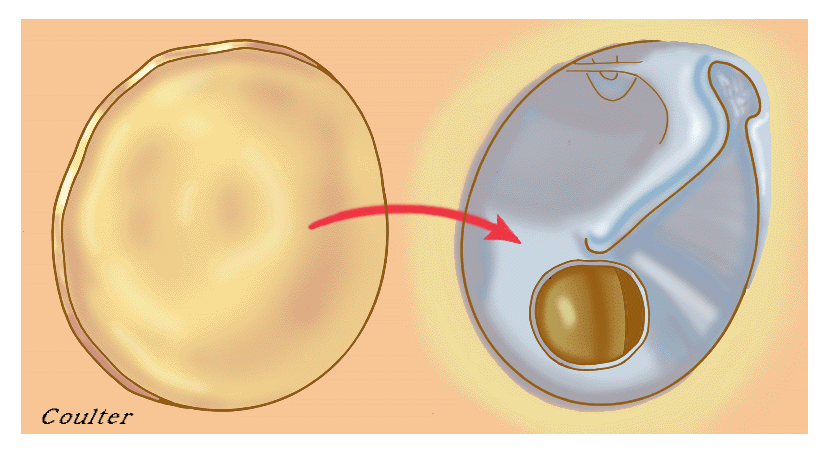
Step 4: A temporalis fascia graft is then placed over the eardrum, effectively closing the hole.
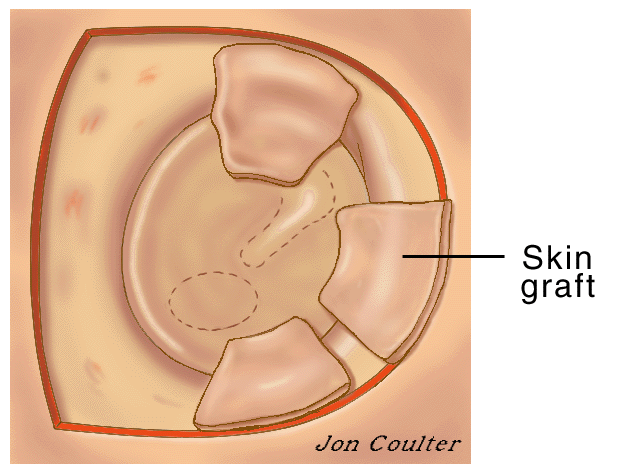
Step 5: Pieces of the ear canal skin are then placed over the bare ear canal and temporalis fascia graft.
In This Section

Tools
About Dr. Prasad
 Dr. Sanjay Prasad MD FACS is a board certified physician and surgeon with over thirty-two years of sub-specialty experience in Otology, Neurotology, advanced head and neck oncologic surgery, and cranial base surgery. He is chief surgeon and founder of the private practice, Metropolitan NeuroEar Group, located in the metropolitan Washington D.C. area.